Thermally Modified Ash vs. Ipe: A Detailed Comparison
When choosing wood for outdoor projects such as decking, siding, cladding,
fencing, or outdoor furniture, durability and appearance are two of the most
important considerations. Two premium materials that are frequently compared
are thermally modified ash and ipe. While
both are known for their strength and long-lasting performance, they differ
significantly in their origin, sustainability, maintenance requirements, and
overall cost.
This guide compares thermally modified ash and ipe across key factors to help
you determine which material is the best fit for your next outdoor project.
What Is Thermally Modified Ash?
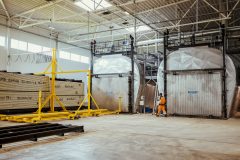
Thermally modified ash is a hardwood that undergoes a specialized
heat-treatment process. During thermal modification, the wood is heated to
high temperatures in a controlled, oxygen-free environment without the use
of chemicals.
This process changes the wood's cellular structure, making it more
dimensionally stable and significantly more resistant to moisture, decay,
and insects.
The result is a durable hardwood with improved outdoor performance while
maintaining the natural beauty of ash.
Key Benefits
- Excellent dimensional stability
- Increased resistance to rot and insects
- Chemical-free modification process
- Sustainable and environmentally friendly
- Attractive rich brown color
What Is Ipe?
Ipe, often referred to as Brazilian Walnut, is an extremely dense tropical
hardwood native to Central and South America.
It has earned a reputation as one of the most durable decking materials
available because of its natural resistance to weather, insects, decay,
and heavy wear.
Its exceptional hardness makes it suitable for demanding outdoor
applications, although its density also makes installation more
challenging.
Key Benefits
- Exceptional durability
- Naturally resistant to insects and decay
- Extremely hard surface
- Long service life
- Premium appearance
Appearance Comparison
Both woods offer beautiful natural aesthetics, but their appearance differs
considerably. Thermally modified ash features warm golden-brown to
chocolate-brown tones with a straight, consistent grain pattern. Over time,
it develops an elegant silver-gray patina if left untreated.
Ipe has a darker appearance, ranging from olive-brown to deep
reddish-brown. Its grain is tighter and more varied, giving it a luxurious,
exotic look.
Durability and Weather Resistance
Durability is one of the biggest factors when selecting exterior wood.
Ipe is naturally among the most durable hardwoods in the world. Its dense
fibers provide excellent resistance to moisture, insects, fungi, and harsh
weather conditions.
Thermally modified ash achieves impressive durability through its
heat-treatment process. While it may not be as naturally dense as ipe,
thermal modification greatly enhances its ability to withstand outdoor
environments.
For residential decks, siding, pergolas, and cladding, thermally modified
ash provides excellent long-term performance.
Dimensional Stability
One of the biggest advantages of thermally modified ash is its dimensional
stability. Because the heat-treatment process reduces the wood's ability to
absorb moisture, it experiences less expansion, contraction, warping, and
twisting during seasonal weather changes.
Although ipe is highly durable, it can still experience some movement due
to moisture because it has not undergone thermal modification.
Maintenance Requirements
Both materials require relatively low maintenance. Thermally modified ash
can be cleaned periodically and optionally treated with UV-protective oil
to preserve its original brown color. Without maintenance, it naturally
develops a silver-gray finish.
Ipe also benefits from occasional oiling if maintaining its rich dark color
is important. Otherwise, it too will weather into a gray patina over time.
Sustainability
Sustainability has become an increasingly important consideration for
homeowners, architects, and builders.
Thermally modified ash is generally regarded as the more environmentally
responsible choice because it uses responsibly harvested hardwood and
improves durability without chemical preservatives.
Ipe can also be sustainably sourced when certified by responsible forestry
organizations, but concerns over tropical hardwood harvesting make sourcing
especially important.
Installation
Installation requirements vary considerably. Thermally modified ash is
easier to cut, drill, and fasten using standard woodworking tools.
Due to its exceptional hardness and density, ipe usually requires
pre-drilling and specialized fasteners, increasing both labor time and
installation costs.
Cost Comparison
Thermally modified ash generally offers a more affordable solution while
still providing premium outdoor performance.
Ipe is typically more expensive because of its density, imported origin,
and higher installation costs. Although the upfront investment is greater,
many homeowners choose ipe for its extremely long lifespan.
Best Applications
Thermally Modified Ash
- Residential decking
- Exterior siding
- Wall cladding
- Pergolas
- Outdoor furniture
- Garden structures
Ipe
- High-end decking
- Commercial boardwalks
- Marine environments
- Heavy-traffic outdoor spaces
- Luxury residential projects
Thermally Modified Ash vs. Ipe: Quick Comparison
| Feature |
Thermally Modified Ash |
Ipe |
| Origin |
Heat-treated hardwood |
Tropical hardwood |
| Durability |
Excellent |
Outstanding |
| Moisture Resistance |
Excellent |
Excellent |
| Stability |
Excellent |
Very Good |
| Sustainability |
High |
Depends on sourcing |
| Installation |
Easier |
More difficult |
| Maintenance |
Low |
Low |
| Cost |
Moderate |
Premium |
Which Wood Should You Choose?
Choose thermally modified ash if you want a sustainable,
dimensionally stable, attractive hardwood that offers excellent outdoor
performance with easier installation and a more budget-friendly price.
Choose ipe if your priority is maximum durability,
extreme hardness, and a premium tropical appearance, and you are
comfortable with the higher material and installation costs.
Both woods are excellent choices for outdoor applications, and the right
option ultimately depends on your project's budget, environmental
priorities, design preferences, and performance requirements.
Conclusion
Thermally modified ash and ipe each offer exceptional qualities for
exterior projects. Thermally modified ash stands out for its
sustainability, dimensional stability, and ease of installation, while
ipe remains one of the toughest and longest-lasting hardwoods available.
By understanding the differences in durability, maintenance, appearance,
cost, and environmental impact, you can confidently choose the material
that best meets your project's needs and delivers years of reliable
outdoor performance.